Be yourself; Everyone else is already taken.
— Oscar Wilde.
This is the first post on my new blog. I’m just getting this new blog going, so stay tuned for more. Subscribe below to get notified when I post new updates.
Be yourself; Everyone else is already taken.
— Oscar Wilde.
This is the first post on my new blog. I’m just getting this new blog going, so stay tuned for more. Subscribe below to get notified when I post new updates.
YOLLOCALLI ARTS REACH: CREATING COMMUNITY THROUGH ART
By Alva Chavez and Daniella Tello-Garzon
Yollocalli Arts Reach is a youth programming organization that has worked in the Little Village and Pilsen neighborhoods since 1997. Their mission is to “strengthen the value of youth art and culture by providing equal access to communal, artistic, and cultural resources that allow youth to become creative and engaged community members.” Staff and students alike shape the environment that makes Yollocalli a safe space for youth to express themselves while gaining new skills. In turn, the environment provides opportunities for students and staff to discover and engage with their passions. These are some of their stories.
Yollocalli Arts Reach es una organización que ha proveído programación para jóvenes en los vecindarios de La Villita y Pilsen desde el 1997. Su misión es “fortalecer el valor del arte juvenil y la cultura por medio de proveer acceso igual a recursos comunitarios, artísticos y culturales que permiten que los jóvenes se conviertan en creativos y dedicados miembros de la comunidad”. Ambos el personal y los estudiantes dan forma al ambiente que hace que Yollocalli sea un espacio seguro para que los jóvenes se expresen así mismos mientras aprenden nuevas habilidades. A cambio, el ambiente provee oportunidades para los estudiantes y el personal para descubrir y dedicarse a sus pasiones. Aquí están algunas de sus historias.
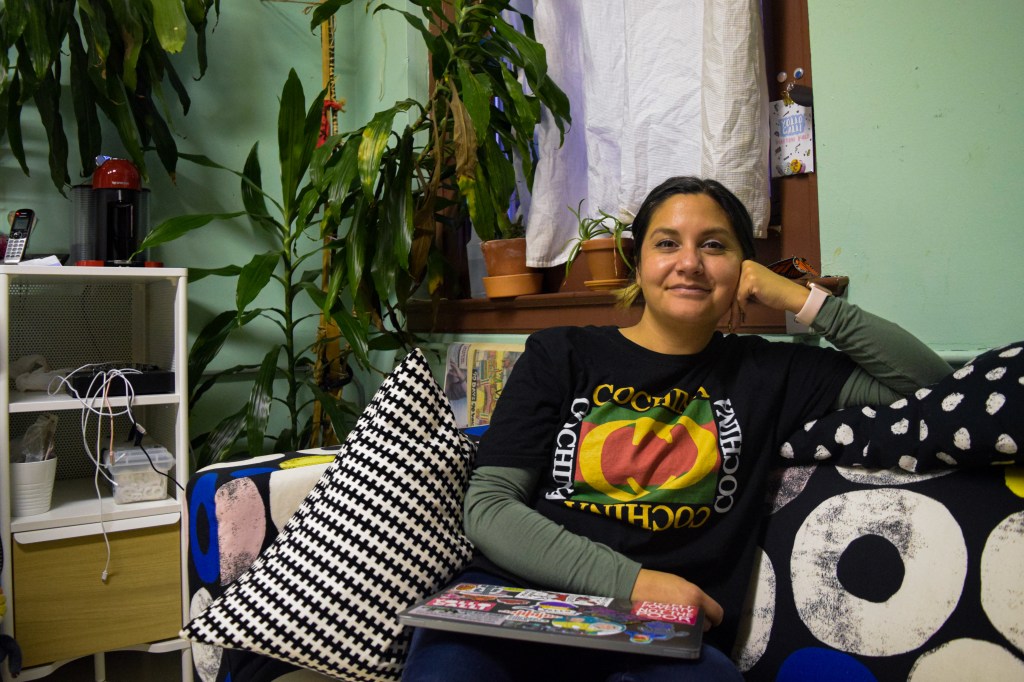
After returning to Chicago from the University of Arizona, Vanessa Sanchez, now director of Yollocalli, joined the organization through a friend in 2001. Sanchez was drawn to Yollocalli by their free art classes after not being able to start arts programming at the University of Illinois at Chicago. Since joining, Sanchez has not left. She began as a student, and now she leads the youth programming organization. For Sanchez, Yollocalli has provided more than just a safe space to do art.
“It’s been a way for me to, now that we’re in Little Village, give back to my community because I grew up in Little Village. I’m from this neighborhood, so us being here has been great to see that next generation of the weirdos and the artists in the neighborhood and have a space for them to do all this crazy stuff,” says Sanchez.
Pictured: Vanessa Sanchez, director, Little Village
Después de regresar a Chicago de la University of Arizona, Vanessa Sanchez, quien ahora es la directora de Yollocalli, se unió a la organización por medio de un amigo en el 2001. Sanchez fue atraída hacia Yollocalli por las clases gratuitas de arte después de no poder empezar un programa de arte en la University of Illinois at Chicago. Desde unirse, Sanchez no se ha ido. Empezó como estudiante, y ahora dirige la organización de programación para jóvenes. Para Sanchez, Yollocalli ha proveído más que un lugar seguro para hacer arte.
“Ha sido una manera para que yo, ahora que estamos localizados en La Villita, pueda devolverle algo a mi comunidad ya que crecí en La Villita. Yo soy de este vecindario, entonces el que nosotros estemos aquí ha sido genial ver esa próxima generación de los raros y de los artistas en el vecindario y tener un espacio para que ellos hagan todas estas cosas locas”.
Fotografiada: Vanessa Sanchez, directora de Yollocalli, La Villita
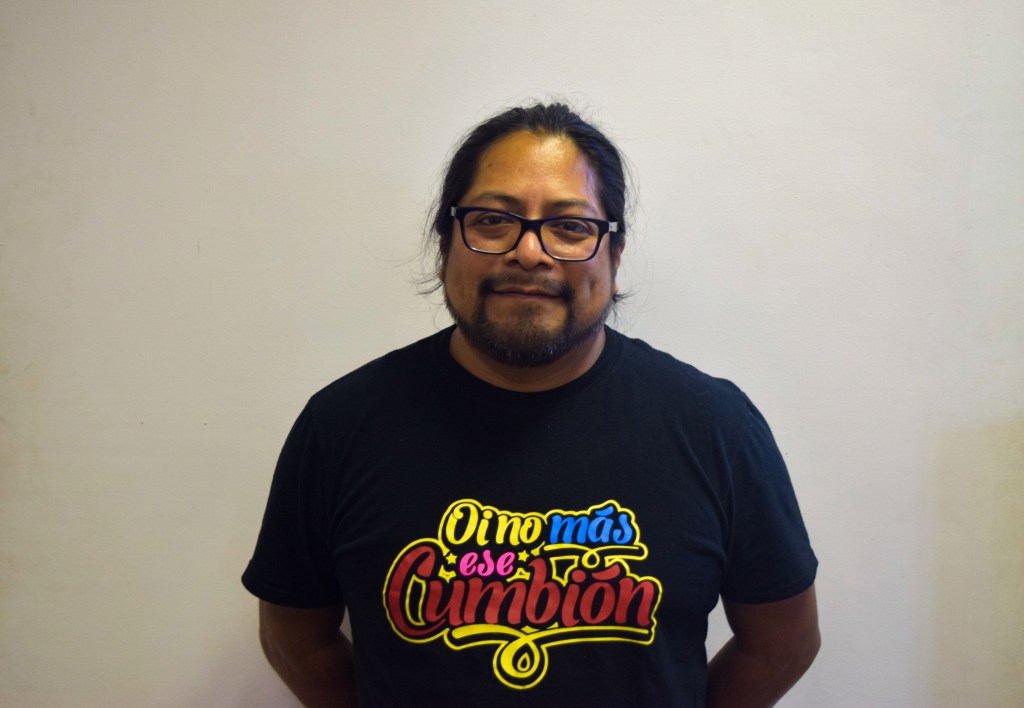
Charly Garcia, who is a teaching artist for La Mesita, also joined Yollocalli in 2001. Six months later, Garcia started a five-year training period with Radio Arte, a community-based radio station that was in the same building as Yollocalli back then. Eventually, Radio Arte closed down but even then, Garcia always involved himself in the world of multimedia. Now, at Yollocalli, not only does he work with La Mesita, but also with Youth Media, where they produce radio segments and are dedicated to making them a multimedia project with audio and video.
Pictured: Charly Garcia, La Mesita teaching artist
Charly Garcia, quien es un artista educativo para La Mesita, también llego a Yollocalli en el 2001. Seis meses después, Garcia empezó un entrenamiento de cinco años con Radio Arte, una estación de arte comunitaria que estaba en el mismo edificio que Yollocalli en aquel entonces. Eventualmente, Radio Arte cerro, pero, aun así, García siempre se mantuvo involucrado en el mundo de multimedia. Ahora, en Yollocalli, trabaja no solo con La Mesita, sino también con Youth Media, donde producen segmentos de radio y se dedican a hacerlos un proyecto de multimedia con video y audio.
Fotografiado: Charly Garcia, artista educativo para La Mesita
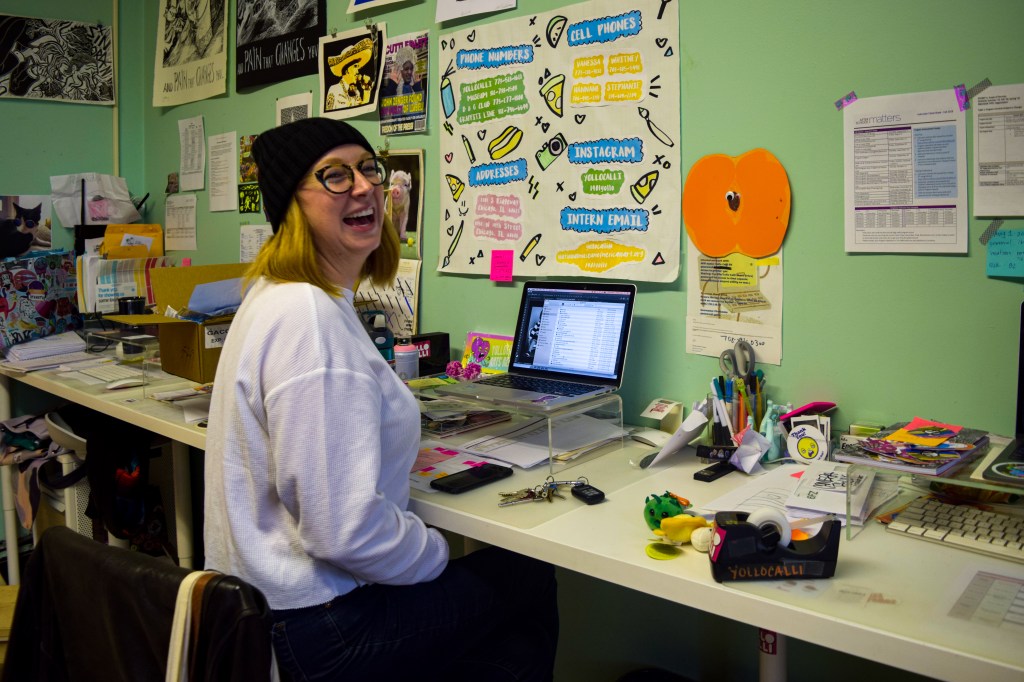
The year Whitney Ross, the youth development advisor for Yollocalli, graduated with a teaching degree was the year that thousands and thousands of teachers were laid off. Panicked and with a background in art, she Googled after school art programs and found Yollocalli on the list. At the time, both she and Yollocalli lived in Pilsen. The random brick building with no signs on it, as Ross described it, that housed Yollocalli would eventually become her workplace.
Pictured: Whitney Ross, youth development advisor
El año que Whitney Ross, la asesora del desarrollo juvenil para Yollocalli, se graduó con un título de profesor fue el año que miles y miles de maestros fueron despedidos. Alarmada y con un trasfondo en arte, ella busco programas para después de la escuela de arte y encontró a Yollocalli en la lista. En ese tiempo, ambos ella y Yollocalli vivían en Pilsen. El edificio desconocido de ladrillo que no tenía ningún letrero, como Ross lo describió, eventualmente se convertiría en su lugar de trabajo.
Fotografiada: Whitney Ross, asesora del desarrollo juvenil
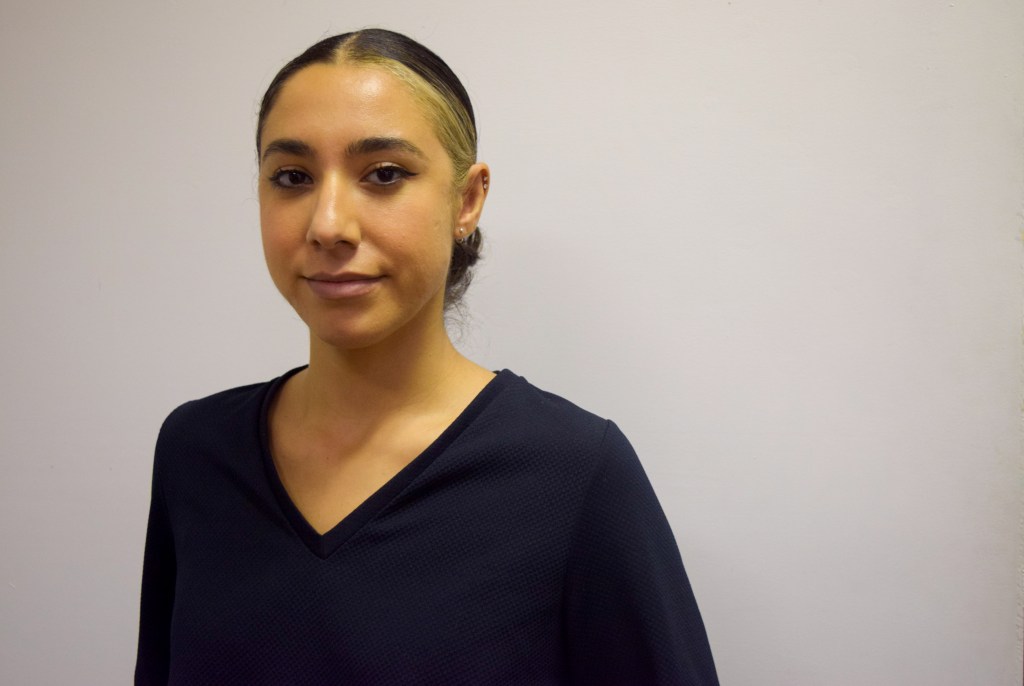
Hannane Hanafi, the programs coordinator for Yollocalli, knew about Yollocalli’s presence and reputation before she joined the organization. Hanafi’s desire to incorporate arts programming into organizations she had previously worked with wasn’t always received well because there were other goals at play. However, art is what Yollocalli is all about, and Hanafi joined with the desire to contribute to that.
Pictured: Hannane Hanafi, programs coordinator
Hannane Hanafi, la coordinadora de programas para Yollocalli, sabía sobre la presencia y reputación de Yollocalli antes de que se uniera a la organización. El deseo de Hanafi de incorporar programación de arte en las organizaciones con que antes trabajaba no siempre fue bien recibido porque había otras metas en juego. Sin embargo, Yollocalli se trata todo sobre el arte, y Hanafi se unió con el deseo de contribuir a eso.
Fotografiada: Hannane Hanafi, coordinadora de programas
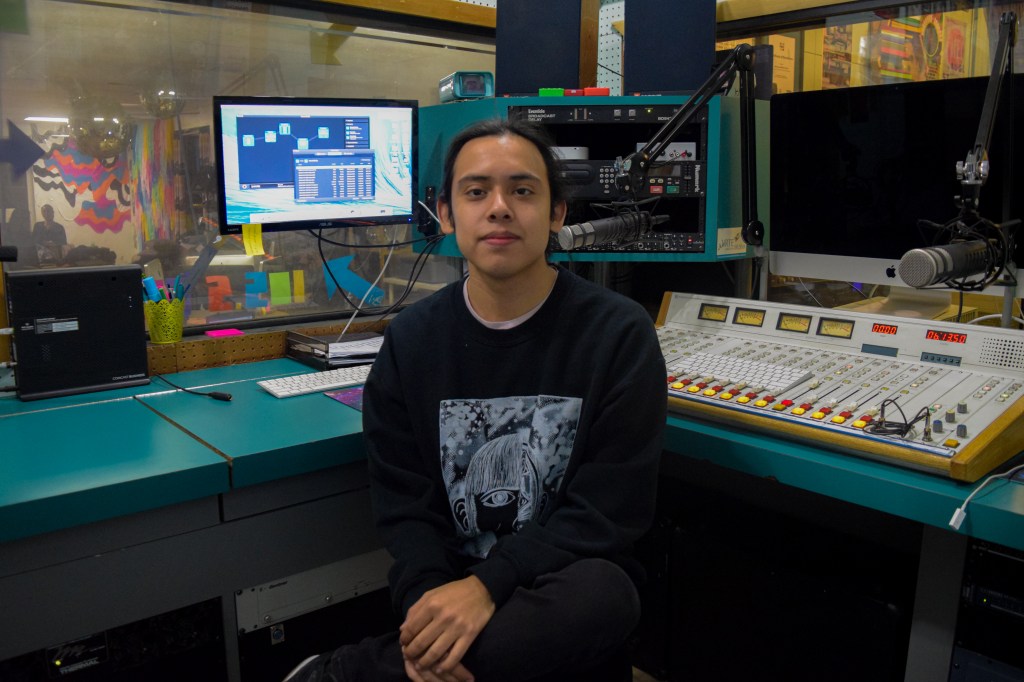
Gerardo Salgado Flores, who is a teaching artist for Your Story, Your Way, joined Yollocalli freshly out of high school at the age of 18. After enjoying a summer term, he decided to join as a student while also being a college student.
“It became a whole ball of curiosity that just ended up developing, and now, I’m here in an audio instructor position at Yollocalli,” says Flores
Pictured: Gerardo Salgado Flores, Your Story, Your Way teaching artist
Gerardo Salgado Flores, quien es un artista educativo para Your Story, Your Way, se unió a Yollocalli recién graduado de la secundaria a la edad de 18 años. Después de disfrutar de un término de verano, el decidió participar como un estudiante al mismo tiempo que asistía la universidad.
“Se convirtió en una bola de curiosidad que se desarrolló, y ahora, estoy aquí en una posición de instructor de audio en Yollocalli,” dice Flores.
Fotografiado: Gerardo Salgado Flores, artista educativo para Your Story, Your Way
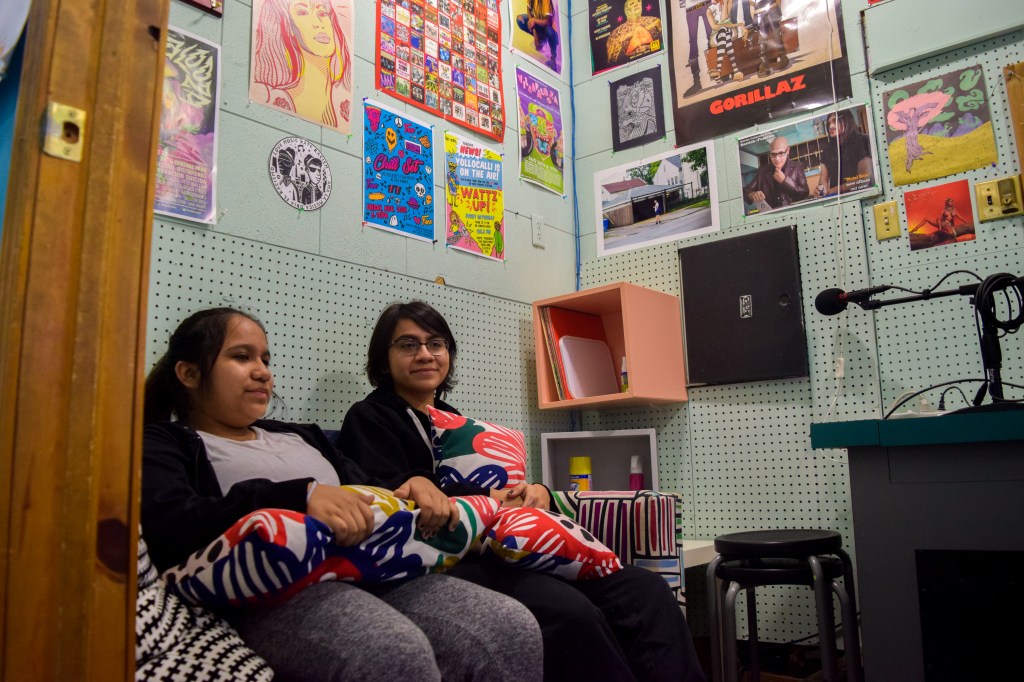
Gloria “Nine” Valle, who is now a co-teacher at Yollocalli, recalls joining the organization: “At first, I wanted to join because I wanted to get paid to do art. On another note, it was a way to do group street art, and it was something new to me because I would so street art alone. Coming to Yollo, I started meeting people who would do the same thing that I was doing, and the mentors here are super awesome so I started becoming really close friends with them outside of the classrooms, so that led me to keep coming back and just keep doing different things here.”
Pictured: Merelyn “Mere” Valle, student (left) and Gloria “Nine” Valle, co-teacher (right)
Gloria “Nueve” Valle, quien ahora es una co-maestra en Yollocalli, recuerda cuando se unió a la organización: “Al principio, quería unirme porque quería ser pagada por hacer arte. Cambiando de tema, era una manera de poder hacer arte callejero en grupo, y era algo nuevo para mí porque yo hacia el arte callejero-sola. Al venir a Yollo, empecé a conocer a personas que hacían lo mismo que yo, y los mentores aquí son super estupendos entonces empecé a formar amistades cercanas con ellos fuera del salón de clase, y eso me llevó a seguir viniendo y seguir haciendo cosas diferentes aquí”.
Fotografiadas: Merelyn “Mere” Valle, estudiante (izquierda) y Gloria “Nueve” Valle, co-maestra (derecha)
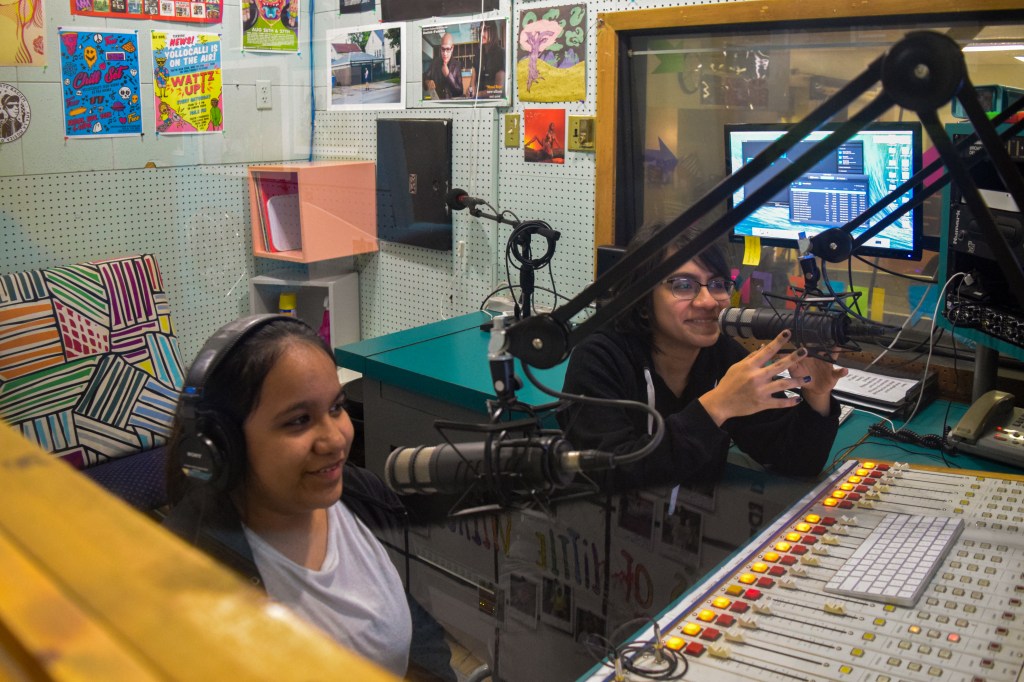
When Nine began to go to Yollocalli, her family consisted of Mere, her dad and herself. This familial structure meant that Nine had to take Mere with her wherever she went. At that moment, Nine thought to herself: “If she is going to go with me, I want her to do something too and for her to feel like a part of it and for her to not just be there because I’m there.” Thinking about this, Nine said, “Later, I saw that other people began to see her own independence and the good things that she knows how to do with art and audio. I like that we are doing the same thing but separately. She does her projects and I do mine. And we learn together even though we have a big age difference.”
Pictured: Merelyn “Mere” Valle, student (left) and Gloria “Nine” Valle, co-teacher (right)
Cuando Nueve empezó a ir a Yollocalli, su familia consistía de ella, Mere, y su papá. Esta estructura familiar significaba que Nueve debía llevar a Mere con ella a donde sea que fuera. En ese momento Nueve pensó así misma: “Si va a ir conmigo quiero que también ella haga algo y también se sienta que es parte de eso y no nada más está allí porque yo estoy allí.” Al pensar en esto, Nueve dijo: “Ya después vi que también otras personas empezaron a ver su propia independencia y sus propias cosas buenas que sabe hacer con arte y audio. Me gusto que estamos haciendo lo mismo pero separado. Ella hace sus proyectos y yo hago los míos ahora. Y aprendemos juntas, aunque tengamos la diferencia muy grande”.
Fotografiadas: Merelyn “Mere” Valle, estudiante (izquierda) and Gloria “Nueve” Valle, co-maestra (derecha)
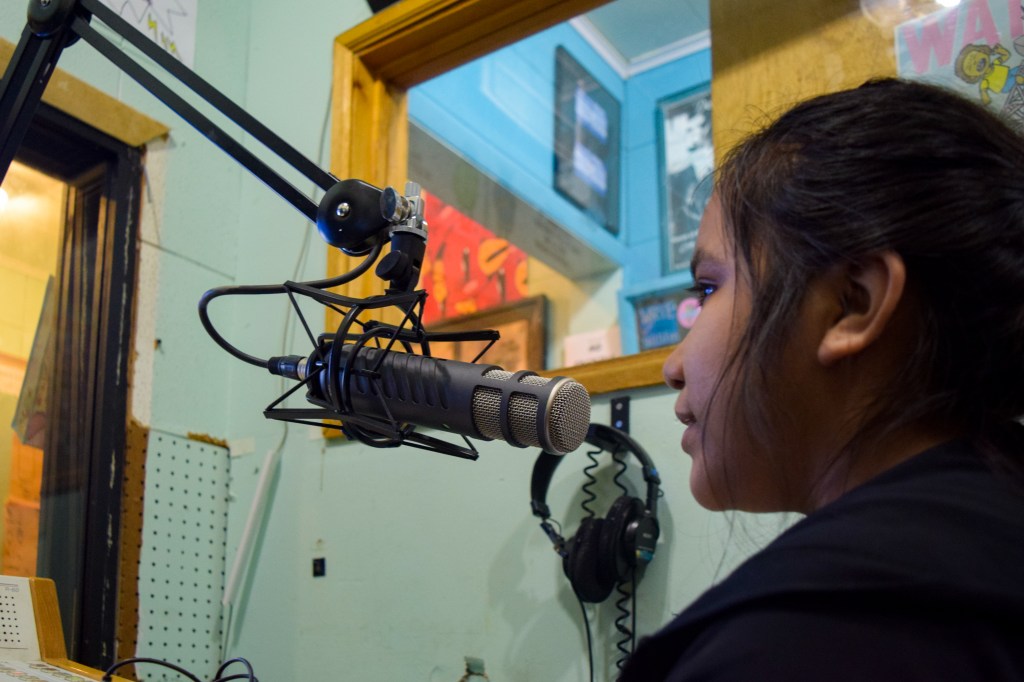
“My favorite project was when I did my first show that was about the LGBTQ+ community, and I talked about what it is to be diverse and inclusive. I explained that people are different and we need to know how to accept them,” says Mere, who with only 12 years of age is Yollocalli’s youngest student.
Pictured: Merelyn “Mere” Valle, student, 12 yeard old
“Mi proyecto más favorito del mío era cuando hice mi primer show que era de LGBTQ+ community y hablé de que es ser diverso e inclusivo. Explique cómo la gente es diferente y debemos saber cómo aceptarlos” dice Mere, que con tan solo 12 años es la estudiante más joven de Yollocalli.
Fotografiada: Merelyn “Mere” Valle, estudiante, 12 años
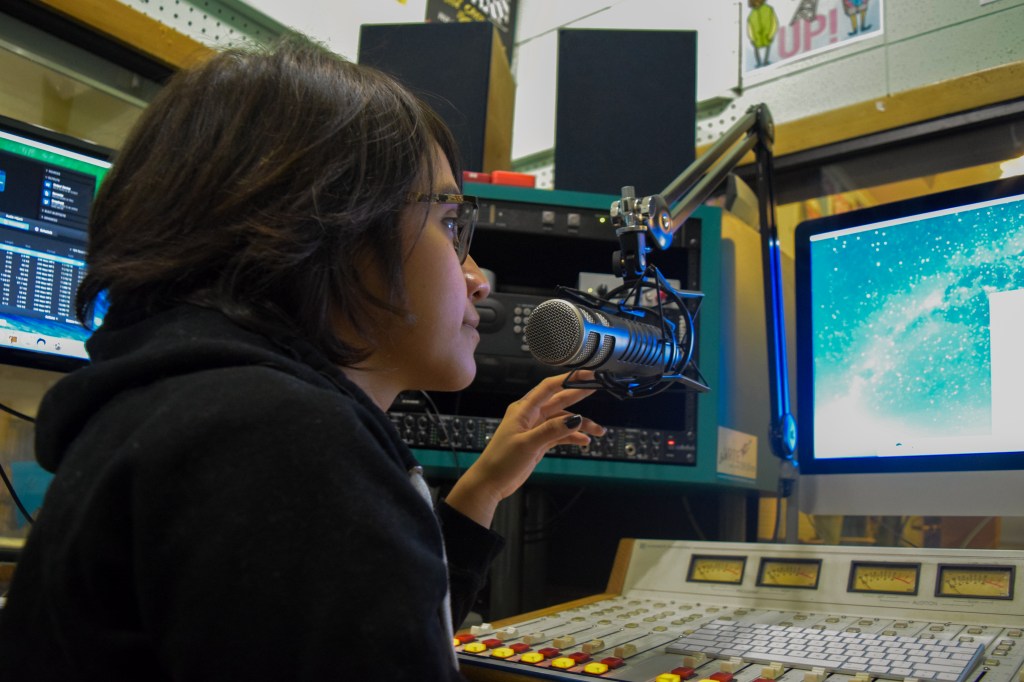
“The first time I messed up on radio, on live radio. When I was learning, and it was my first time, and they decided to put me on controls, and I was panicking. I told Steph, like ‘I don’t think I should do that,’ and she was like ‘No, no. You got it. It’s super simple.’ And then, I left my guest mic on, and she screamed like ‘Oh my God, I’m so freaking nervous.’ And it went on live radio, so I always think about that when I’m about to do a show. I just have to remember to not space out and do what I gotta do.”
Pictured: Gloria “Nine” Valle, co-teacher, 21 years old
“La primera vez que me equivoque en radio vivo. Cuando estaba aprendiendo, y era mi primera vez, y decidieron ponerme en los controles, y tenía pánico. Le dije a Steph: ‘Yo no creo que debería hacer eso’, y ella me dijo: ‘No, no. Tú lo puedes hacer. Es super sencillo’. Y después, deje el micrófono de la invitada prendido, y ella gritó: ‘Ay Dios mío, estoy tan nerviosa’. Y eso fue transmitido en vivo, entonces siempre pienso sobre eso cuando estoy a punto de hacer un segmento. Solo me tengo que recordar de no perder el enfoque y hacer lo que tengo que hacer”.
Fotografiada: Gloria “Nueve” Valle, co-maestra, 21 años
This is an example post, originally published as part of Blogging University. Enroll in one of our ten programs, and start your blog right.
You’re going to publish a post today. Don’t worry about how your blog looks. Don’t worry if you haven’t given it a name yet, or you’re feeling overwhelmed. Just click the “New Post” button, and tell us why you’re here.
Why do this?
The post can be short or long, a personal intro to your life or a bloggy mission statement, a manifesto for the future or a simple outline of your the types of things you hope to publish.
To help you get started, here are a few questions:
You’re not locked into any of this; one of the wonderful things about blogs is how they constantly evolve as we learn, grow, and interact with one another — but it’s good to know where and why you started, and articulating your goals may just give you a few other post ideas.
Can’t think how to get started? Just write the first thing that pops into your head. Anne Lamott, author of a book on writing we love, says that you need to give yourself permission to write a “crappy first draft”. Anne makes a great point — just start writing, and worry about editing it later.
When you’re ready to publish, give your post three to five tags that describe your blog’s focus — writing, photography, fiction, parenting, food, cars, movies, sports, whatever. These tags will help others who care about your topics find you in the Reader. Make sure one of the tags is “zerotohero,” so other new bloggers can find you, too.

 Yollocalli: Creating Community through Art